“`html
Sewer Backup Coverage: A Commercial Property Gap Many Business Owners Miss
Most business owners assume that if water damages their building, their commercial property insurance will cover it.
Unfortunately, it is not always that simple.
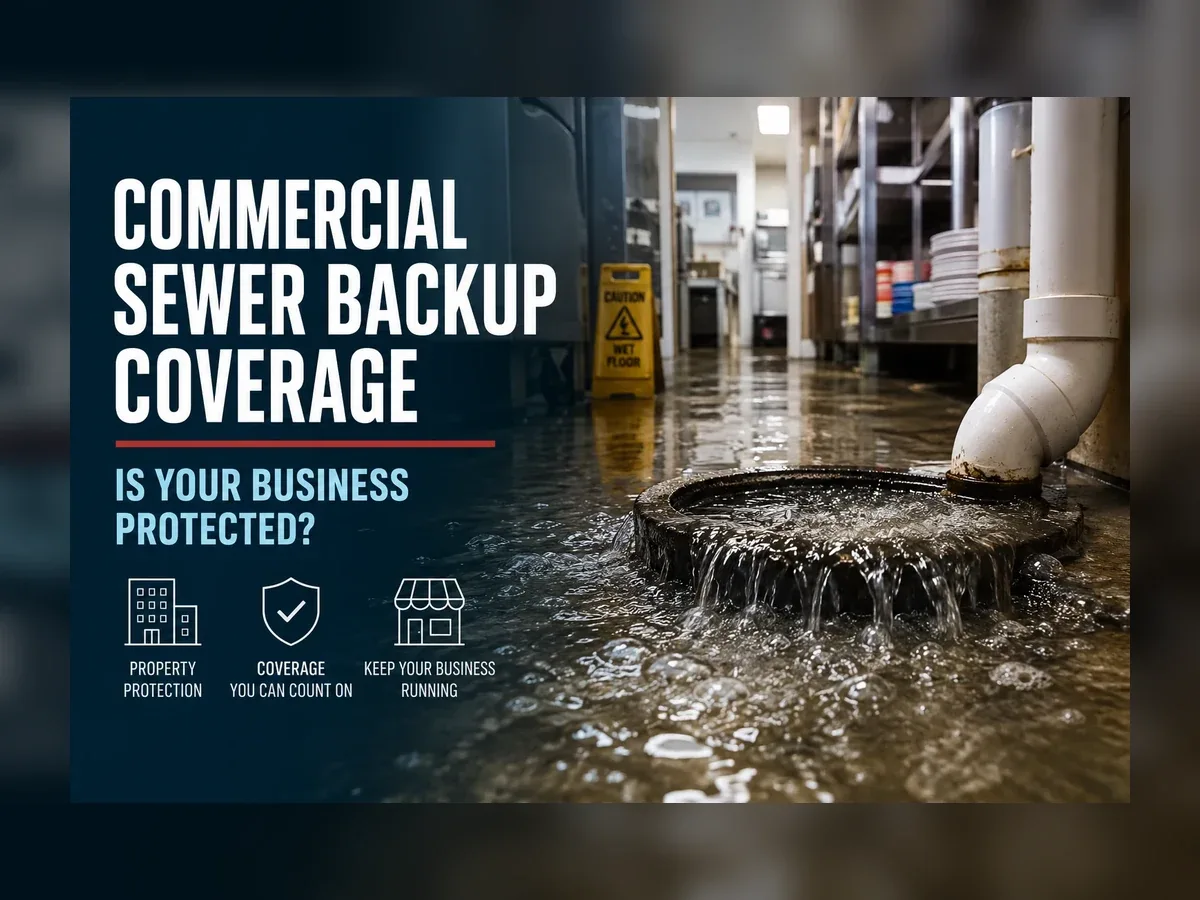
A burst pipe, a roof leak, a flood, and a sewer backup may all leave water on the floor, but an insurance policy may treat each type of loss differently. Sewer backup coverage is one of those details that can easily get overlooked until a business owner files a claim and discovers the damage is not covered the way they expected.
This is especially important for restaurants, hotels, apartment buildings, retail centers, offices, and other commercial properties with floor drains, shared plumbing lines, basements, or below-grade mechanical rooms.
What Is a Sewer Backup?
A sewer backup happens when water or wastewater flows backward into a building through a drain, toilet, sink, sump system, or other plumbing connection.
It can be caused by several things:
- A blockage in the building’s sewer line
- Grease buildup in a restaurant or commercial kitchen
- Tree roots growing into underground pipes
- Aging or damaged plumbing
- A sump pump failure
- Heavy rainfall overwhelming the municipal sewer system
- A clog in a shared sewer line serving multiple tenants
The damage can spread quickly. Wastewater may affect flooring, drywall, furniture, inventory, equipment, and mechanical systems at the same time.
Cleanup can also be much more involved than drying out a room after a small leak. Because sewage may contain contaminants, the property may need professional remediation and sanitation before the business can safely reopen.
The important point: Water damage is not one single coverage category. The cause of the water damage matters when an insurance company reviews a claim.
The Part That Surprises Many Business Owners
Many standard commercial property policies do not automatically include coverage for water that backs up or overflows from a sewer, drain, or sump.
That does not necessarily mean the policy is bad. It means sewer backup is often treated as a separate coverage issue that needs to be addressed with an endorsement.
A commercial property policy may cover damage from a sudden burst pipe while excluding damage caused by a sewer backup. The result may look similar inside the building, but the cause of the loss matters when the insurance company reviews the claim.
This is one reason we encourage business owners to review more than just the price of their policy. The lowest premium does not help much if an important coverage gap was missed.
Learn more about the basics of protecting your building, equipment, and inventory on our
commercial property insurance page.
Which Businesses Should Pay the Most Attention?
Almost any building connected to a sewer system has some exposure, but certain businesses should take a closer look.
Restaurants and Food-Service Businesses
Restaurants deal with grease, food particles, floor drains, and constant plumbing use. A clogged line can quickly lead to a serious sanitation issue and force the business to close until the problem is resolved.
Hotels and Motels
Hotels have a high number of bathrooms, laundry facilities, drains, and plumbing connections. Even a localized backup can affect guest rooms, common areas, or the ability to keep part of the property open.
Hotel owners can learn more about other important hospitality exposures on our
hotel and motel insurance page.
Apartment Buildings and Multi-Tenant Properties
A backup in a shared line can impact multiple units or tenants at the same time. Older buildings and properties with below-grade areas may face an even greater exposure.
Retail, Office, Healthcare, and Commercial Buildings
A business does not need to be in the food or hospitality industry to have a problem. Retail stores, offices, warehouses, medical facilities, and other commercial properties can also face substantial cleanup costs and business interruptions after a sewer backup.
How Sewer Backup Coverage Is Usually Added
Sewer backup coverage can often be added to a commercial property policy by endorsement.
The endorsement may help cover resulting damage to covered property inside the building, such as:
- Flooring and drywall
- Furniture and fixtures
- Inventory
- Business equipment
- Electrical systems
- Heating and cooling equipment
- Other covered contents
There is an important detail to check: the sewer backup coverage limit may be lower than the overall commercial property limit.
For example, a building may be insured for $1 million, but the policy may only provide a much smaller amount for sewer backup damage. That may be enough for a minor incident, but it may not be enough if contaminated water spreads through a large portion of the property.
The right limit depends on the building, the layout, the type of business, and how much property could be damaged before the problem is discovered.
What Sewer Backup Coverage May Not Pay For
Sewer backup coverage is helpful, but it is not designed to cover every possible expense.
It may cover the resulting damage inside the building without paying for the cost to repair or replace the actual pipe, drain, or sump system that caused the problem.
Flood-related backups may also be treated differently. If a sewer backup is caused by a qualifying flood event, the loss may fall under a flood insurance policy rather than a standard commercial property endorsement.
The details vary by insurance company and policy form, so it is important to review the actual coverage rather than rely on a general assumption.
Do Not Forget About Lost Income
The property damage is only one part of the risk.
A restaurant may lose revenue while the kitchen is being sanitized. A hotel may lose room income while damaged areas are being repaired. A retail store may have to close temporarily while flooring and inventory are replaced.
That is where business income coverage may become important.
However, business income coverage for a sewer backup may not apply automatically just because the physical damage endorsement was added. It is worth asking whether your policy also protects lost income and extra expenses after a covered sewer backup claim.
Some smaller and mid-sized businesses may also benefit from reviewing whether a
Business Owner’s Policy
is appropriate for their overall insurance program.
A Few Practical Ways to Reduce the Risk
Insurance coverage matters, but prevention is still the best first step.
Commercial property owners should consider:
- Regular sewer-line and drain inspections
- Routine cleaning of lateral lines
- Grease-trap maintenance for restaurants and commercial kitchens
- Sump-pump testing
- Backflow-prevention valves when appropriate
- Prompt attention to slow drains and recurring plumbing problems
- Keeping records of inspections, maintenance, and repairs
Good maintenance records can also be helpful if a claim occurs. They show that the property owner took reasonable steps to reduce the risk instead of allowing a known problem to continue.
Questions to Ask Before Your Next Renewal
When reviewing your commercial property insurance, ask:
- Does my policy include sewer backup coverage?
- What is the coverage limit?
- Is there a separate deductible?
- Does the endorsement cover damage to my equipment and inventory?
- Does the coverage extend to business income and extra expenses?
- How would the policy respond if heavy rainfall or flooding caused the backup?
- Is my current limit realistic for the size and layout of my property?
These are not complicated questions, but they are easy to miss when the renewal conversation focuses only on the premium.
Let’s Review Your Commercial Property Coverage
Insurance is supposed to help protect your business when something unexpected happens. The time to find a coverage gap is before there is wastewater on the floor and a claim adjuster reviewing the policy.
At TWFG Insurance Services, we help business owners look beyond the premium and understand how their coverage is structured. As an independent agency, we work with multiple insurance carriers and help our clients compare options based on the actual risks their businesses face.
Do You Know Whether Your Policy Includes Sewer Backup Coverage?
We can review your current commercial property insurance and help you identify potential gaps before a claim happens.
You can also call us at
706-416-4160
to speak with a local agent.
This article is provided for general educational purposes only. Insurance coverage varies by carrier, policy form, endorsements, exclusions, limits, and the specific facts of each claim. Please review your policy and speak with a licensed insurance professional regarding your business.
“`